Overview Programme Keynotes Submission Venue Accommodation Organizers Partners Contact

Overview

Welcome to the km-scale Global Modelling Summit 2026!

WarmWorld and related projects from across Europe and the world are organizing this summit to take stock of the rapid and exciting scientific and technical developments associated with the development of the next generation km-scale global models.

The summit will take place in Hamburg, Germany, on 20-24 July 2026, and will bring together experts from the domains of modelling, observations, high performance computing, human and environmental impacts, and AI-assisted work flows, all of whom are building on the unique capabilities and technological profile of the km-scale models.

The km-Scale Global Modelling Summit 2026 is paring with a sister meeting with increased focus on turbulence representations in Storm-Resolving Earth System Models (SR-ESMs) - the ParaChute Conference taking place in Reading, UK, on 13-17 July 2026.

Timeline
  • March 31, 2026 - deadline for abstract submission
  • April 10, 2026 - confirmation deadline and invoicing
  • May 15, 2026 - summit program published
  • June 20, 2026 - deadline for payments
  • July 20-24, 2026 - meet-up in Hamburg!

Programme


km-scale is here – now what?

This summit will build on major research projects such as NextGEMS, EXCLAIM, WarmWorld, and EERIE to provide a follow-up to EVE from the perspective of the research community. Projects such as Destination Earth will provide an operational or application perspective. The km-scale summit has been designed to provide a forum for summarizing and consolidating progress and to define next steps in efforts to put Earth-system modelling on a more physical foundation.

Conference contributions

Conference contributions are solicited on the following and related topics:

  • Technical challenges: Machines, future technologies, programming paradigms, data structures, precision, interoperability of data and models, technical benchmarking

  • AI on top and all around: On Top: emulation and generative scenarios; All around: compression, data management, fuzzy analysis, agents

  • km-scale processes and their impact on the Earth system: Emergent phenomena, scientific benchmarking, scientific opportunities at hm scales, model and observational hierarchies

  • km-scale processes and their impact on human systems: Extremes, complex terrain, energy infrastructure

  • Symbiosis between simulation and observations: Observing and representing the coupled system at km-scales, future satellite and other ocean/atmosphere observing systems.

Topical contributions will allow us to answer questions such as: What is our present capability to represent the Earth system using km-scale models, and what have we learned from it? How can we improve data handling? How can we accelerate model performance? What new programming paradigms are emerging to help us exploit new computational technologies? How can we better coordinate data access and numerical experimentation internationally? What is the path to hm-scale simulations? What benefit can be expected from new methods for treating still unresolved proesses related to cloud-microphysical processes, turbulence, or treatments of the land surface? How can research support applications such as Destination Earth, and how does this all link to the expanding universe of machine learing?

A new research programme

Building on this assessment, the summit will address these and many more questions to outline a research programme for the coming years, and help build the community to carry it forth.

Keynotes


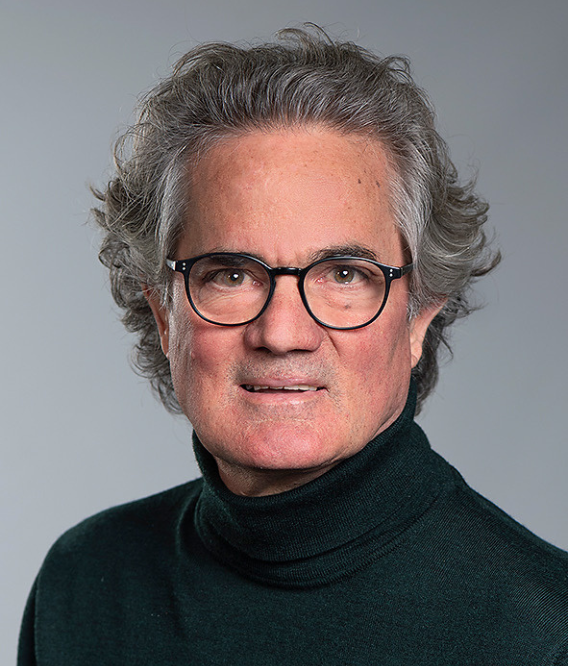
Dr. Cathy Hohenegger (Max Planck Institute for Meteorology, Hamburg, DE) is a climate scientist whose work has been central to advancing km-scale modeling of moist convection from weather to climate applications. Trained at ETH Zurich, she investigated the predictability of convection at the dawn of km-scale numerical weather prediction, followed by postdoctoral work at ETH and the University of Washington. Since 2010, she has led an independent research group at MPI-M, focusing on the dynamical controls of deep convection and land–ocean precipitation feedbacks. She has co-led the development of global km-scale climate models, culminating in the first fully coupled water–energy–carbon cycle simulation at 1.25 km resolution, recognized by the 2025 Gordon Bell Prize in climate modeling.
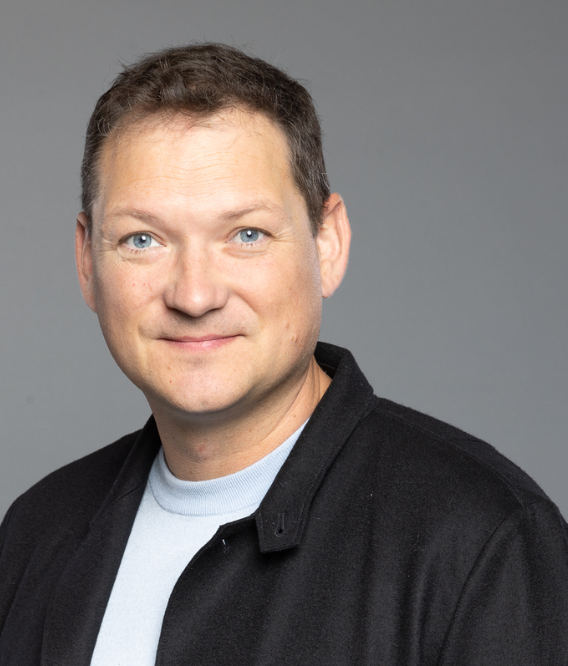


Prof. Dr. Thomas Schulthess (CSCS - Swiss National Supercomputing Center, CH) is a Director of the CSCS and Professor of Computational Physics at ETH Zurich.  Prof. Schulthess spearheaded innovations including Europe’s first GPU-accelerated supercomputing system and co-developed MeteoSwiss’ cutting-edge weather forecasting model optimized for GPU architectures, an achievement that earned the prestigious Swiss ICT Award in 2016.  He has twice won the most prestigious prize in computing, the Gordon Bell Prize (2008, 2009), and has been a mastermind and architect of many of the innovative approaches required for simulations of the Earth system at kilometer and finer scales.
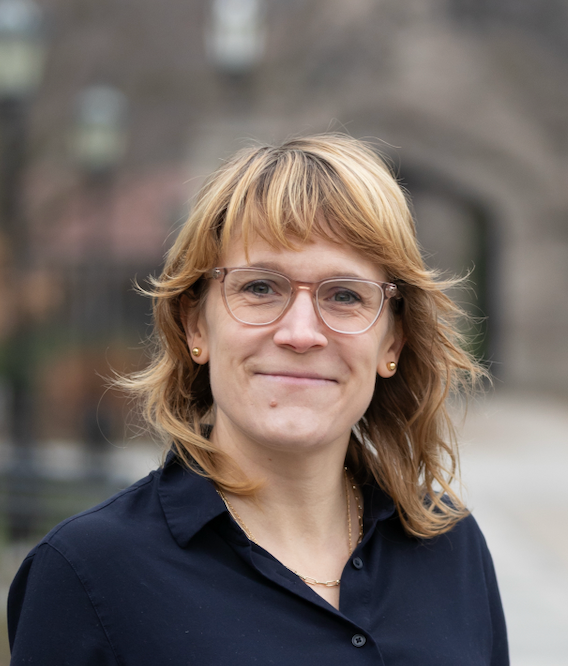


Prof. Tiffany Shaw (University of Chicago, US) is a climate scientist whose work bridges theory, numerical models (physics-based and AI), and observations to improve confidence in climate projections. Her most recent research focuses on understanding the physical mechanisms underlying discrepancies between climate model predictions and observed signals, particularly in atmospheric circulation. She is a Fellow of the American Geophysical Union and the American Physical Society and a Coordinating Lead Author (CLA) for the Intergovernmental Panel on Climate Change (IPCC) Seventh Assessment Report (AR7).


Dr. Axel Timmermann (IBS Center for Climate Physics, Pusan National University, KR) is a leading Earth system scientist with more than two decades of internationally recognized research spanning Europe, the United States, and Asia. He is the founding director of the IBS Center for Climate Physics in Busan, South Korea. His work covers a broad spectrum osf topics, including high-energy physics, El Niño–Southern Oscillation dynamics, paleoclimate, physical oceanography, climate predictability, isotope geochemistry, dynamical systems, human evolution, and theoretical ecology. His current research focuses on speleothem-based climate reconstructions from the Kalahari Desert, models of terrestrial life, and high-resolution Earth system modeling.


Invited speakers

  • Ryan Abernathy* (Columbia University)
  • Peter Dueben (ECMWF)
  • Claudia Frauen (DKRZ)
  • Nicolas Gruber (ETH Zurich)
  • Christian Jakob (Monash University)
  • Tobias Kölling (MPI-M)
  • Jenni Kontkanen (CSC-IT)
  • Bryan Lawrence (NCAS)
  • Hailong Liu (IAP, CAS)
  • Tina Odaka* (IFREMER)
  • Adam Sobel (Columbia University)
  • Allison Wing (Florida State University)
  • Laure Zanna* (New York University)

* pending confirmation
Call for contributions

We encourage abstracts covering the scientific, technological, and application aspects of km-scale modelling. We especially encourage submissions from new voices to mix with more established researchers as we look to the future. Register by submitting an abstract to the link below. Abstract management, ticketing and payment services are provided by Converia.

Submission details:

  • abstracts are limited to 400 words;
  • abstract submission will be open until 31 March 2026;
  • once your contribution is accepted, you will be notified and asked to register for participation. This will also include invoicing for the participation fee.

Registration for general attendance will open on 1 April 2026.

The event participation fee is 300 EUR. This includes lunches and coffee breaks, refreshments, an ice-breaker event and the summit dinner.

Abstract submission

Venue

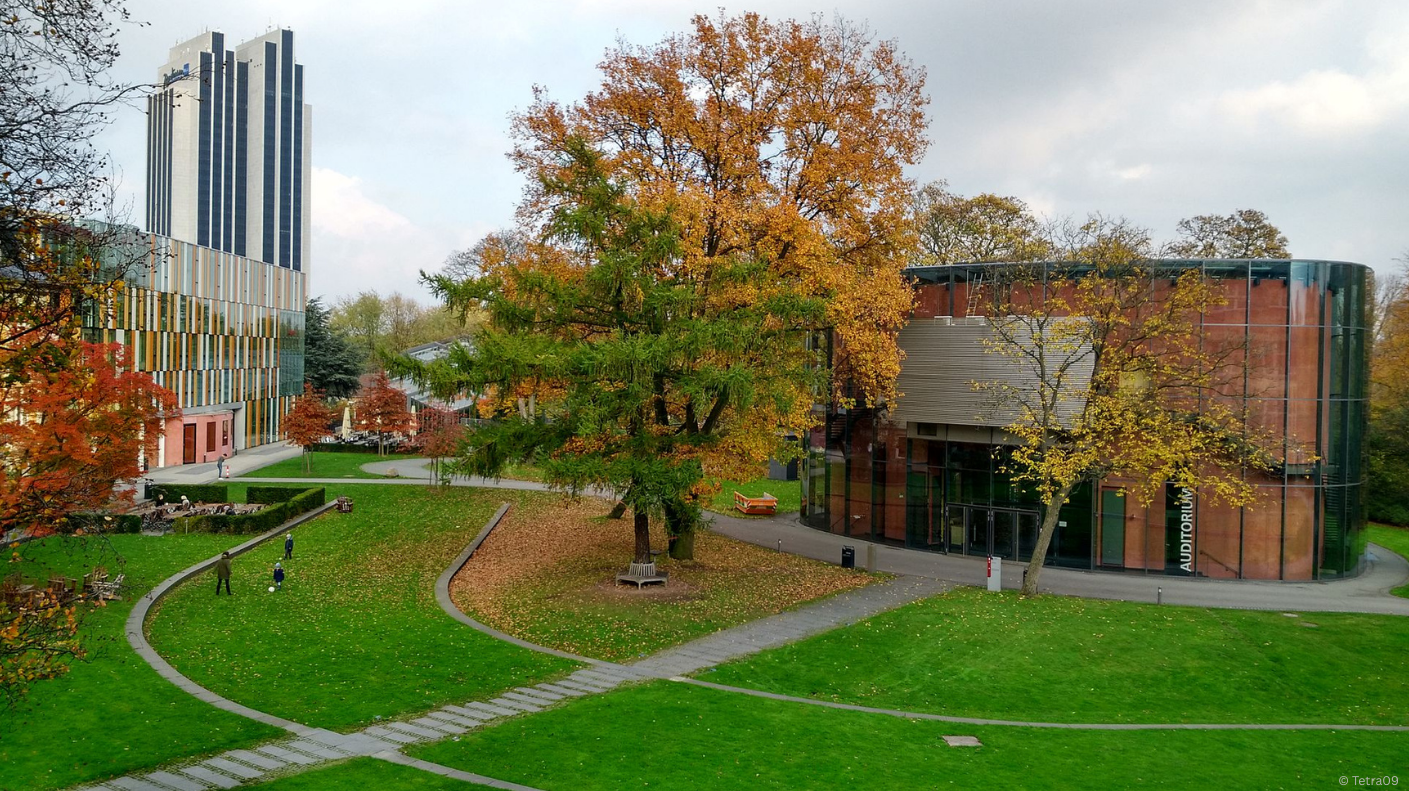
The summit takes place at the Bucerius Law School , located in the heart of Hamburg. Known for its modern facilities and central location, the venue provides an excellent setting for discussions, networking, and academic exchange.

Address:

Bucerius Law School
Jungiusstraße 6
20355 Hamburg, Germany


Getting there

Bucerius Law School is easily accessible by public transport:

  • Subway (U-Bahn): The nearest station is Stephansplatz (U1), just a short walk from the venue.
  • Suburban Train (S-Bahn): Bahnhof Dammtor (S11, S21, S31) is within a 5-minute walk.
  • Bus: Several bus lines stop at Bahnhof Dammtor (112, 19, 4, 5, X3, X80) or Gänsemarkt (112, 19, 4, 5, X3), both close to the venue.
  • From the airport: Hamburg Airport (HAM) is about 25 minutes away by Suburban Train (S1).

For more information on how to reach the venue, visit Bucerius Law School’s website .

Accommodation

Most of the hotels recommended for the visitors of MPI-M would also be within 30-min walk to the venue. Please follow this link for the list.

In case the hotels nearest to the venue are fully booked due to ongoing trade fairs and large events in the city, we recommend considering the following hotels, which are well-connected (all within 30 min using public transport) to our event venue by public transport:

Organizers

The km-Scale Global Modelling Summit 2026 is organized under the guidance of the Scientific Steering Committee:

  • Hendryk Bockelmann (DKRZ)
  • Charlotte Debus (KIT)
  • Claudia Frauen (DKRZ)
  • Thomas Jung (AWI)
  • Daniel Klocke (MPI-M)
  • Vera Schemann (Uni-Cologne)
  • Bjorn Stevens (MPI-M)
  • Florian Ziemen (DKRZ)

Partners and Sponsors


WarmWorld is a BMFTR project that refactors the ICON-based SR-ESM model to best make use of the exascale technological advances for kilometer-scale climate simulations. The project also develops innovative workflows to make the information contained within the projected trajectories transparent to application communities, thus supporting the harmonisation of national and international efforts to provide, disseminate, learn from, and use the highest possible quality of climate information.

EERIE (European Eddy RIch Earth System Models) is a Horizon Europe project (grant no. 101081383) unraveling the role of ocean mesoscale processes in shaping the climate trajectory from seasonal to centennial time scales in a warming world. To this end EERIE develops and exploits a new generation of Earth System Models (ESMs) that are computationally efficient and capable of explicitly representing the ocean mesoscale. EERIE will substantially improve our ability to faithfully represent the centennial-scale evolution of the global climate, including its variability and extremes.